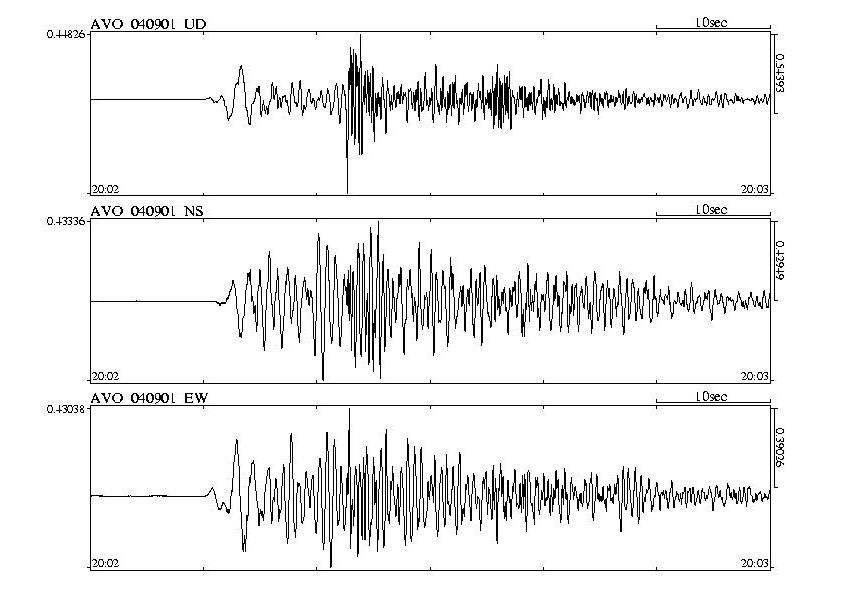
In 2010 and 2011 the city of Christchurch on New Zealand's South Island was heavily affected by a series of large earthquakes. The worst of these was the 22nd February earthquake that as well as causing some 185 deaths also severely damaged many buildings including the city's Victorian cathedral. Much of the damage was caused, not by the power of the earthquake which wasn't that large, but by the liquefaction of the ground that the city is built on.
Video explanation of liquefaction
Footage of liquefaction
To replace the cathedral that was built from stone, a new one has been constructed using cardboard as a light and cheap material to quickly give Christchurch an important step to recovery after such a devastating event.
BBC News story
Norway's biggest oil company, Statoil, are developing an old gas field in an area 125 km form the Norwegian coast. This doesn't seem to be a "leap forward" until we look at the technology they are using to exploit the resource. The company have built a series of compressors to extract the gass from the hydrocarbon trap, compress it and pump it to a plant onshore, but these installations are sunk and placed on the sea bed - there is no platform at the sea surface and they are operated remotely. This does give the possibility of exploiting hydrocarbon reserves in deep water or in places like the Arctic Ocean that are very challenging places to put conventional rigs or to develop smaller traps.
The controversy comes from the tension between the undoubted commercial benefit from extracting and selling the gas - Norway os one of the richest countries in the world because if geological resources like this - and the environmental impact of producing an using the hydrocarbons.
It is a hugely impressive engineering achievement (and it does present on opportunity to further the development of carbon capture and storage) but is it worth the environmental cost?
A geophysicist called M. King Hubbert back in 1956 predicted that oil production for any oilfield would take the form of bell curve from initial discovery through to maximum productivity and on to gradual decline. He accurately predicted that American oil production would peak in the early 1970s.
Hubbert Peak Theory
However, perhaps geologists need to revisit this idea as new technology to both find and produce oil has brought about the new discovery of oil reserves in places that had been thought to be exhausted of any useful oil such as California and Texas. Such discoveries, along with Shale gas, could go a long way to make the US energy independent. This would have a lot of knock-on effects for the economics and politics of the world.
How do you think that geologists have contributed to this advance in technology? Do you think that it's a good thing?
BBC News Story
We have known since the 1960s that humans can cause earthquakes by pumping water into rocks. The technique has even been used to release the stress on faults by triggering small earthquakes (though with litle real success). An attempt to generate geothermal energy in Switzerland in 2009 by injecting water deep under the Alps resulted in a prison sentence for the owner of the company when earthquakes were triggered under the city of Basel.
Earthquakes under Basel
Recent research has shown that distant earthquakes combined with injection of waste water into the ground can set off relatively large earthquakes, even a 5.7 magnitude event in Oklahoma. Why then is this relevant to us? With our increasing need to find reliable sources of energy from geothermal sources or by fracking shale for gas, we are injecting a lot of water into the ground, particularly in the US so events like these may become more common. A lot of fuss was made about some very small earthquakes near Blackpool because of fracking activity.
Fracking Earthquakes - BGS report
The question is whether our need for energy is worth the inconvenience of increased seismic activity?
Predicting earthquakes is difficult, really difficult. Geologists in America have been working on ways to collect data from a wide area to enable predictions and possibly warnings to be made. Small seismometers plugged into internet routers have been used, with some success. The latest developments are to use smart phones to record and report data as they have positional data (from their built-in GPS) and shaking data (from their accelerometer). There are some problems with the system, such as telling the difference between someone bumping into a table and an earthquake and with the sensitiy of the accelerometer. These may create too many problems with false alarms in the US but there is huge potential for trying to make predictions in the developing world where they may lack infrastructure, but the use of mobile phones is very common.
Can you suggest any other ways that you think a smart phone could be used to help to manage the effects of hazards?
BBC News story
Red Cross Earthquake App
The most expensive piece of geological equipment is on the move. After already making some amazing discoveries about the geology of Mars the rover, Curiosity, is starting its 8km journey to the site of its primary mission. To get there it will have to avoid an area of sand dunes which could trap it.
Curiosity has already discovered conglomerates and cross bedding indicating water erosion and transport as well as unconformities that suggest processes operating over extended periods of time. Most recently it has been investigating water-lain shales, possibly from a lake deposit. It's main mission though is to find evidence for microbial life that may once have exisited on the planet.
Its journey will take months, possibly over a year if something interesting is found along the way. I think that it is one of the most exciting pieces of geological research that's happening at present; what do you think it may find evidence of?
BBC News story
NASA Curiosity site