
Showing posts with label Other Geology. Show all posts
Showing posts with label Other Geology. Show all posts
Thursday, 11 September 2014
Sandbanksy

Wednesday, 10 September 2014
Mission to Mars

It is now 2 years since NASA's Curiosity Rover landed on Mars. The geological discoveries it has made have been spectacular, and it isn't finished yet. BBC News America have reviewed its progress and its future challenges.
What do you think its most important discovery has been to date?
Black Smoker
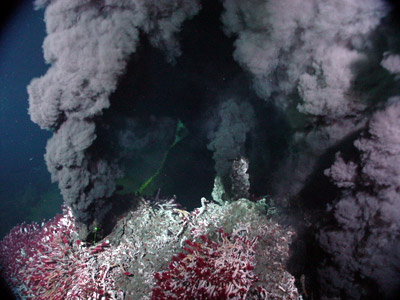
A black smoker is a hydrothermal vent on the sea bed, often found around constructive plate margins. Superheated water is erupted into very cold seawater causing dissolved sulphide minerals to be precipitated (thereby creating the 'smoke'). Finding ancient deposits that were formed this way can be very lucrative as they can be rich in metal ore minerals. You can find out more by watching this YouTube video.
Monday, 1 September 2014
Geology and Civilisation

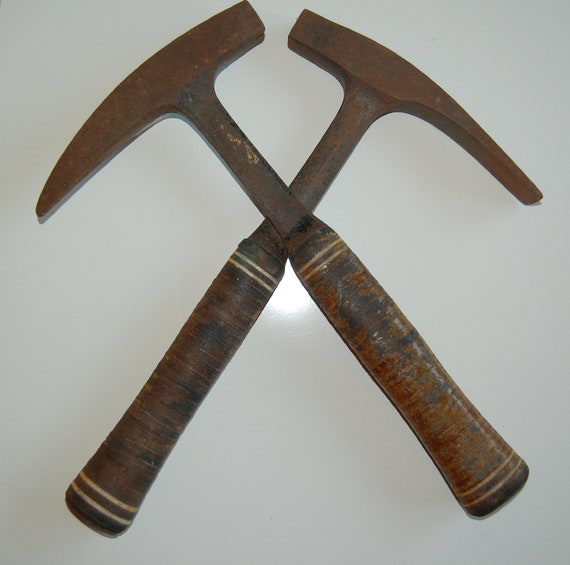
Geology provides the materials for civilisation to exist and a way for us to understand how our home planet works. There are lots of different ways in which an understanding of the science of geology contributes to all our lives. The Geological Society of London (the representative body for professional geologists) have produced some guides to the role of geology and its contribution to our society. You can find them here:
Geology for Society
Thursday, 6 March 2014
The oldest bit of the Earth

Thursday, 20 February 2014
That sinking feeling

The Vale of Glamorgan does suffer from sinkholes as well because our bedrock geology here is mostly limestone. How solid is the ground under your feet?
Sunday, 16 February 2014
Dinosaur makeover

There are a few museums that every geologist should visit to see the amazing collectiosn they hold. The Royal Tyrell Museum of Palaeontology in Canada and, of course, the Natural History Museum in London are at the top of my list. A hidden gem can be found at the Oxford University Museum that has been going so long it has an incredible range of specimens, both geological and biological on display. It has recently reopened after a much needed refurbishment. It is well worth a visit if you are in Oxford, particularly if you like your museums to be properly old-school.
Saturday, 1 February 2014
Lucky or unlucky?

This farmer lost his barn but the boulders that fell in a landslide missed his house. The family living there were also unharmed. Have a look at all the photographs of the scene and you can see how lucky the family were. This is a normal slope-forming process however when people get in the way of these geomorphological changes, problems can occur.
Tuesday, 17 December 2013
Jade Rabbit finds remarkable rocks

China has sent its first space mission to the moon a rover called Yutu (which translates as "Jade Rabbit") is exploring a part of the Moon called the Mare Imbrium.
Initially I must admit to being sceptical about the scientific purpose of the mission, thinking that it may have just been a prestige project moving Chinese space science forward rather than to discover new ideas about the Moon's geology. However, the rover has landed at the eastern edge of its intended landing area and consequently has ended up in a geologically fascinating part of the moon. It has landed at the edge of an area of lava flows which (as they have few impact craters visible) are thought to be some of the youngest flows on the Moon. The geological kit on the rover should show something about the composition of these lavas. It will be interesting to see what Yutu discovers on its lunar travels.
Friday, 22 November 2013
Earth Explorer

In order to try to understand the field it is essential that we make a map of it. The European Space Agency has launched three satellites today to map the field. They will hopefully provide some answers about a crucial aspect of the Earth's physics and possibly help to find mineral resources as well.
This mission is part of the ESA's Earth Explorer Programme.
Friday, 8 November 2013
Wales' Greatest Scientist?

It is 100 years since possibly Wales' greatest scientist died. Alfred Russel Wallace was born in Usk, Monmouthshire but found fame in his lifetime for the work he did in what is now Indonesia. He was the co-discoverer of the theory of evolution by natural selection, though because the other scientist to discover the idea (Charles Darwin) wrote the book - he got most of the credit.
Although most of Wallace's work was biological he did make some discoveries, other tha evolution, that have some geological significance. He defined the study of biogeography and worked out one of the earliest pieces of evidence that would,after his death, be explained by plate tectonics - the Wallace Line.
Although he was one of the most famous scientists of his day, he fell into obscurity after his death. This is being rectified with a new statue that has been installed at the Natural History Museum. His is an inspiring story of scientific excellence, utter determination and modesty despite his obvious talents - he is a Welshman to admire.
Friday, 1 November 2013
Boudinage

Boudinage is from a French word meaning "sausages". It is a distinctive structure formed by extension of a competent rock under tensional stress where it is surrounded by incompetent rock. The competent rock starts to break up forming the sausage-like structures shown in the photograph. This can even happen on a microscopic scale within a rock where the process is called Rodding.
Monday, 21 October 2013
Probably not the end of the World.

Meteorites are beautiful and fascinating things that can tell us a lot about the early Earth and its formation. However there is a downside to them - ask the dinosaurs! Oh wait.. you can't....
Anyway for all the doom-mongers out there; an asteroid (2013 TV-135) has been recently discovered and, after doing a bit of maths, it has been calculated that it will make a near Earth pass in 2032. However, despite some uncertainty about its orbital path, there is only a 1 in 63,000 chance that it will hit us. To put this another way there is a likelihood of 99.998% that it won't hit us in 2032.
So we can rest safe in our beds.
Probably.
Thanks to Rosie for spotting this story.
Friday, 18 October 2013
The rock that fell to Earth

The meteorite that fell into a Russian lake has been recovered. 570 kg of material has been collected from the lake bottom and should give more clues about the origin of the rock and, perhaps, the origin of our planet. Metoerites are the left-overs from planet formation and give us our best evidence about the composition of the deep Earth and its age.
Monday, 14 October 2013
Ash and Crash

What is the link between geology and books? In one of the most geologically remakable places on Earth it is a clearer link than you might imagine. In a place where 10% of the population will be a published author a combination of catastrophic events (both geological and financial) can inspire great works of fiction and non-fiction. Iceland's black lava fields, its steaming solfataras, with its towering volcanoes and fairytale streams also make it the perfect setting for stories of all kinds.
This is just one of the statistics that show the unique qualities of this place; my favourite Icelandic book is an insight into the quirks that make this place special called "The Little Book of the Icelanders" by Alda Sigmundsdottir.
Tuesday, 24 September 2013
Mapping the elements

The British Geological Survey have beeen mapping the chemistry of Britain's geology using a technique called geochemical sampling. By taking samples of soil, sediment and stream water elements from the bedrock can be measured and mapped. The BGS have been doing this for 40 years and have just finished.
The results from this research (called G-BASE) show an interesting pattern that does reveal some interesting patterns and could show the location of hidden geological resources.
Wednesday, 18 September 2013
Skills, skills, skills

You may wonder why teachers keep going on about developing your skills all the time. The reason is that they are important if you are going to be able to choose where you work in the future. It is your skills that give you more to "sell" to an employer than just your time.
The skills that a geologist requires are very broad. A geologist needs a good understanding of all aspects of science; they need to be able to interpret data from: specimens, graphs, maps, cross-sections, diagrams, photo-micrographs, satellite images, mathematical models and more. They have to be numerate and literate as they have to interpret data and then communicate their interpretation to a variety of audiences.
If you can master these skills (by working hard and practising them) there are rewards out there. There are skill shortages in several fields of geology at present such as in the North Sea Oil Field that are leading to higher wages being offered, though the importance of having a range of skills is apparent from the fallout from the drop in coal prices that is affecting parts of Australia.
How are you going to make sure that you have the skills to acheive your dreams?
Monday, 16 September 2013
Curious about Curiosity?

One of the most exciting pieces of geological research currently being undertaken is NASA's Curiosity Rover which is exploring the surface of Mars. The geological discoveries that the mission has already made, before it even reaches its objective, are remarkable.
There is a lot of information about the mission on the Internet, some useful links are below:
NASA Mars Science Laboratory
A year of discovery
Geological discoveries
Wikipedia (Mars Rover)
Tuesday, 3 September 2013
What is Geology?

Over the next few days there are a lot of new students starting their journey through the science of Geology and discovering an exciting new way of looking at the world through the eyes of a Geologist. It does beg the question "What is Geology?"
The definition of the word is a start:

Monday, 2 September 2013
Mr Walsh's penthouse?

This roof-top apartment in Beijing decorated tastefully in fake rock and real trees was built by Zhang Biqing as his own "Grand Design" for his house. Sadly he didn't quite get the proper permission to build it on top of the apartment block. By the time you read this, he will have had to demolish his dream crib.
BBC News story
Subscribe to:
Posts (Atom)