Greenland is a strange place. It has a population a little bit bigger than the population of Barry in an area over 100 times greater than that of Wales. It is still linked to Denmark, relying on a large financial subsidy from the Danish government to pay for essential services which is being reduced as Greenland gradually becomes more independent. This does mean that the Greenlanders will need an alternative source of income to replace the £378,345,000 that the Danes give each year (£6,712 for every Greenlander).
The only way that such a small population with such an inhospitable climate is going to make that amount of money is to exploit its natural resources. This creates a huge dilemma for the people who live there. Geologists from an Australian mining company, Tanbreez, have found a potentially huge deposit of rare earth minerals but the people who live around the site are conflicted. The money and the jobs that the mine will bring will resolve many of the economic and social problems that remote communites suffer, however new social and environmental problems will be caused.
Do you think it's possible to balance the positive and negative impacts of this development? The geology of Greenland means that there are plenty of geological resources in the rocks, this could be the first step in a long period of economic growth or the start of the destruction of communities.
There is an alternative view of these resources here.
Coprolites (fossilised faeces) are trace fossils that give an insight into the diet and digestive processes of long-extinct animals that we cannot get from their body fossils as the soft parts of an animal generally aren't preserved as fossils.
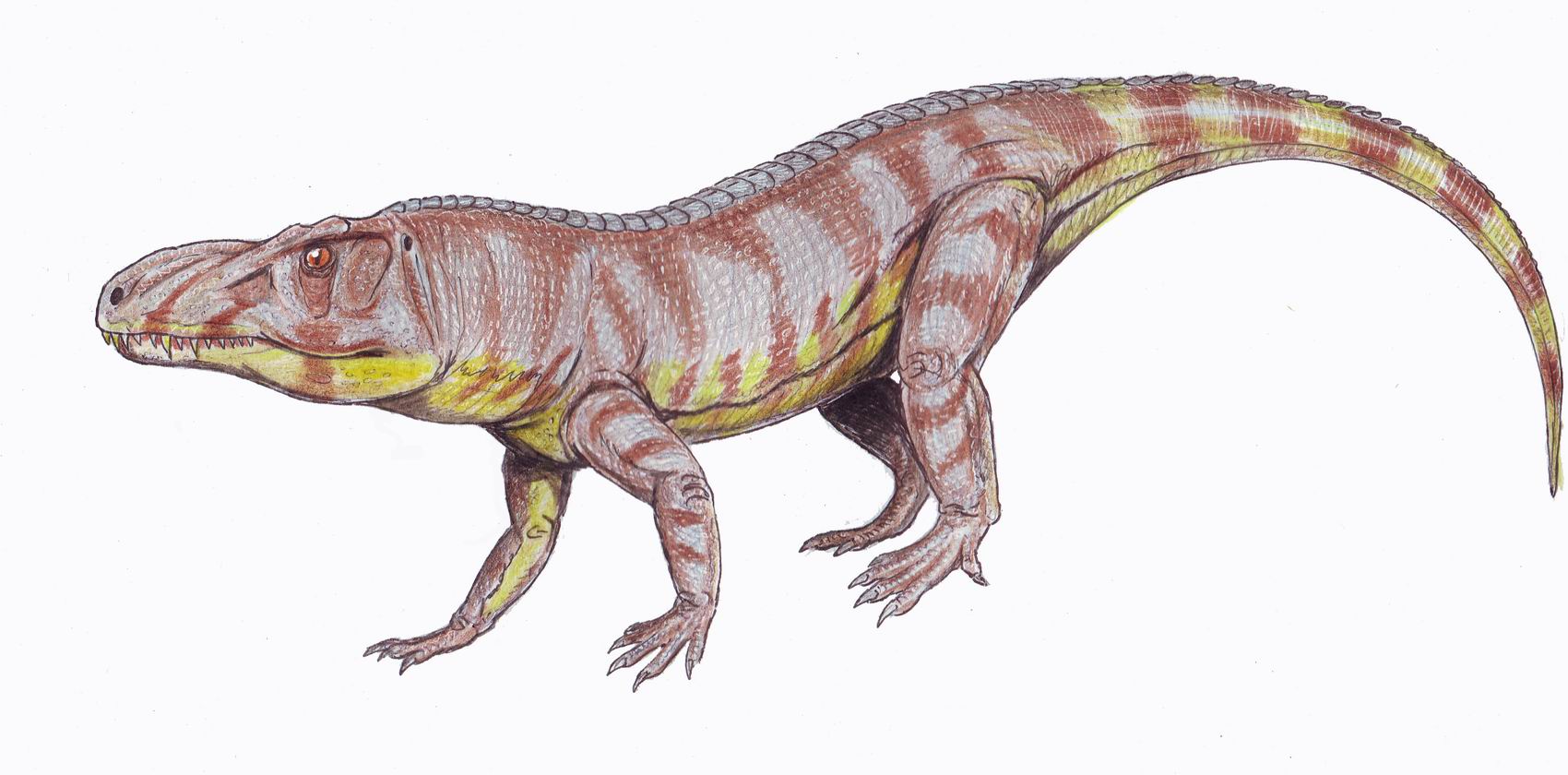
Palaeontologists working in Argentina have found a communal toilet area used by Dinodontosaurus with a remarkable density of 94pm-2 (poos per square metre!). The geological implications of this are fascinating in terms of what it can tell us about the behaviour of an early predecessor of the dinosaurs. The benefits of having a defined place for a toilet are obvious as parasites may be less of a problem and food and faeces aren't mixed. It could also have been a way for the Dinodontosaurus to ward off the crocodile-like predator Luperosuchus.
What I find interesting about this is that it implies some type of social organisation for these animals, something we don't see in modern cold-blooded animals. What do you think caused these animals to behave in this way?
A rare pink diamond has sold for £52,000,000 which, it has to be said, is quite a lot of money for soething that started out its existence as organic material on the sea bed. A trip down a subduction zone and back again via a volcano turned some carbon into an object that is worth the price of 2 new schools or would pay over 1,600 teachers for a year.
Looking at the specimen close up shows that it is flawless and vivid pink in colour. Perhaps that explain why someone would pay £4,362,416.11 per gramme, over 170,000 times more than gold.
Argentinosaurus is a member of a group of dinosaurs that are the biggest animals ever to have lived on land - the Sauropods. This giant size presents a lot of questions for palaeontologists to answer about how they lived: how did they eat enough to survive? how did they breed? how quickly did they grow? and how did they move around?
This last question is particularly tricky, especially when we consider that Argentinosaurus was at least 10 times heavier than an elephant. New research has used computer models to investigate how these giant animals could move as the problem comes down to the maths behind the movement. Let me explain:
As the length of an animal increases, the weight of the animal increases by a cube (power of 3) because the weight is a property of the animals volume. However the force that the muscles can generate only goes up by a square (power of 2) because they are limited by the area of muscle connection to the bone.
The conclusion is that these animals are at the limit of the size that flesh and bone can support on land but they must have had lots of adaptations to cope with the stresses on their bodies - such as limited joint movement to keep them steady. Clearly, size isn't everything.
Meteorites are beautiful and fascinating things that can tell us a lot about the early Earth and its formation. However there is a downside to them - ask the dinosaurs! Oh wait.. you can't....
Anyway for all the doom-mongers out there; an asteroid (2013 TV-135) has been recently discovered and, after doing a bit of maths, it has been calculated that it will make a near Earth pass in 2032. However, despite some uncertainty about its orbital path, there is only a 1 in 63,000 chance that it will hit us. To put this another way there is a likelihood of 99.998% that it won't hit us in 2032.
So we can rest safe in our beds.
Probably.
Thanks to Rosie for spotting this story.