Lagerstätten are sedimentary deposits that show remarkable fossils that otherwise would not be preserved. It is a German word that literally means "resting place" which, I think, is a very appropriate word for such a special and important piece of the fossil record.
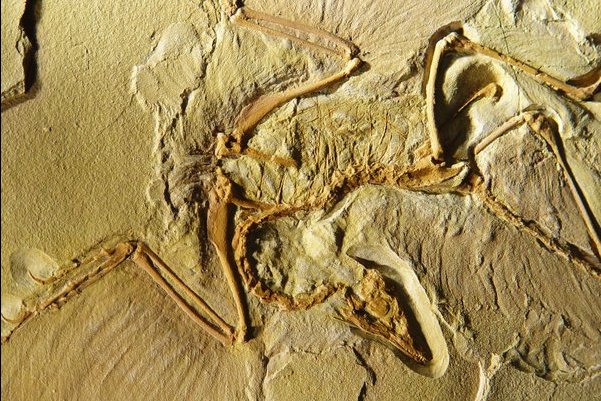
There are quite a few of these around the world which give us tantalising snapshots from the history of life. Several of these are very important in our understanding of key moments in evolutionary history such as Archaeopteryx (shown above) from the Solnhofn Limestone in Germany and the incredible soft-bodied "experimental life forms" of the Burgess Shale.
Another of these was discovered very recently, a site of a mass beaching of whales in the late Tertiary of Chile.
It is hard to get a grip on just how big the Grand Canyon actually is. 446km long, up to 29km wide and 1,800 metres deep make for a big hole. The geology of the canyon is as spectacular as the view but its formation has been the subject of a lot of debate. It is quite obvious that it has been formed by erosion from the Colorado River, but the rate of erosion has been the topic of much geological debate. The most recent interpretation of the erosion is that although parts of the canyon formed up to 70 million years ago the whole drainage path of the Colorado developed through the length of the Canyon in the last 6 million years.
Coprolites (fossilised faeces) are trace fossils that give an insight into the diet and digestive processes of long-extinct animals that we cannot get from their body fossils as the soft parts of an animal generally aren't preserved as fossils.
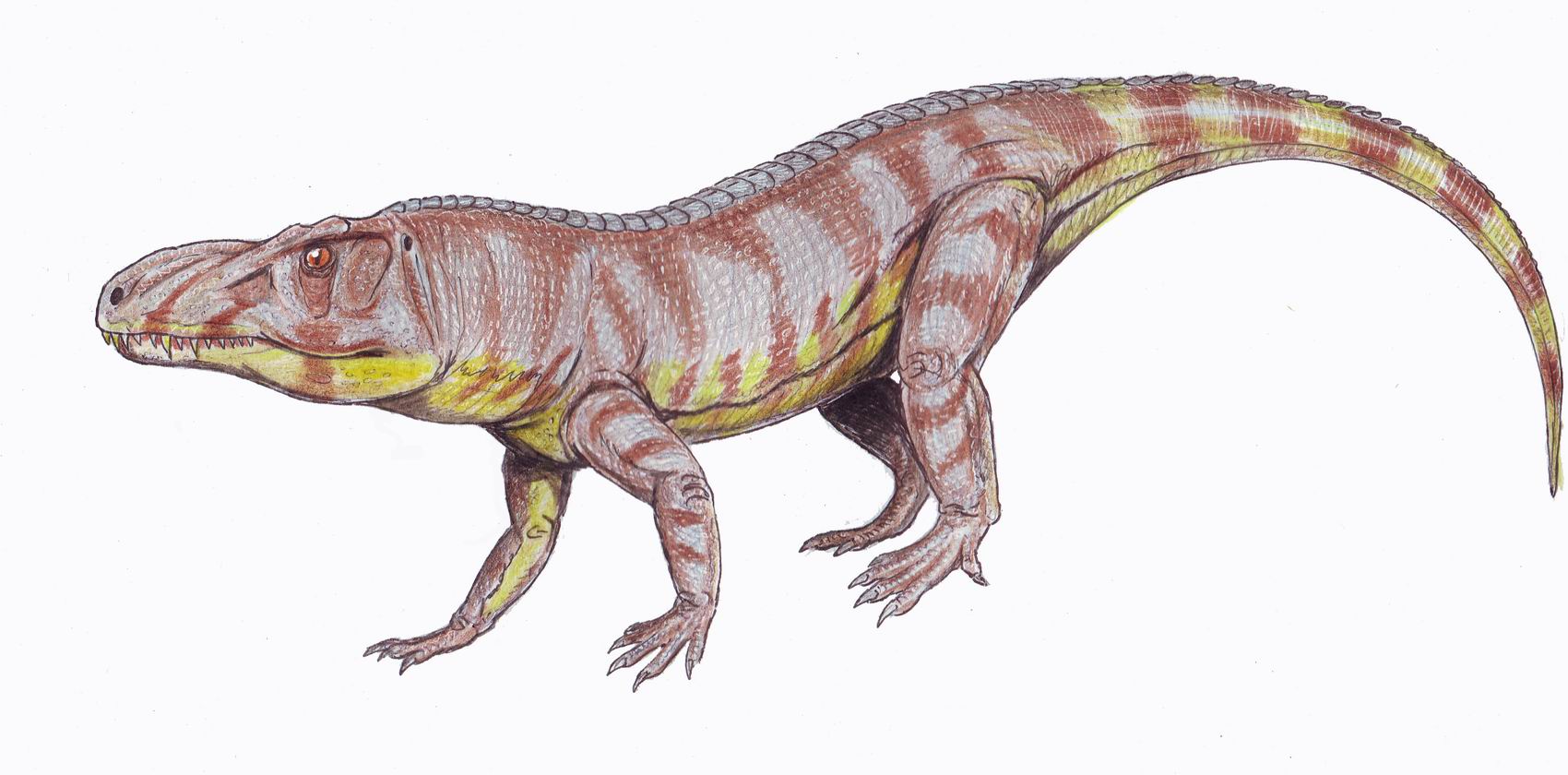
Palaeontologists working in Argentina have found a communal toilet area used by Dinodontosaurus with a remarkable density of 94pm-2 (poos per square metre!). The geological implications of this are fascinating in terms of what it can tell us about the behaviour of an early predecessor of the dinosaurs. The benefits of having a defined place for a toilet are obvious as parasites may be less of a problem and food and faeces aren't mixed. It could also have been a way for the Dinodontosaurus to ward off the crocodile-like predator Luperosuchus.
What I find interesting about this is that it implies some type of social organisation for these animals, something we don't see in modern cold-blooded animals. What do you think caused these animals to behave in this way?
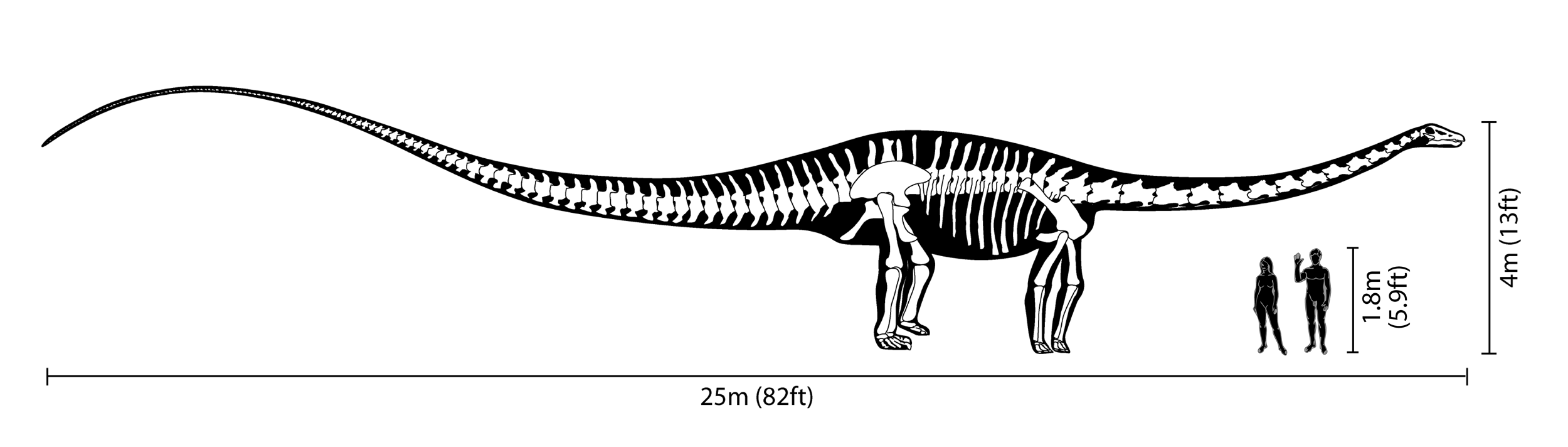
For those of you writing your letters to Santa I have a suggestion. The world's most complete Diplodocus fossil is for sale. It was found in America by a German, assembled in the Netherlands and is now on display (and for sale in the UK). It does have an auction estimate of between £400,000 and £600,000 and you will be competing against museums and collectors in Europe and Asia. You will need a big house to put it on display as this specimen is 17 metres long, but it would be a talking point for anyone who comes to visit.
A Griffith Crack is a mechanism to explain how rocks, which can be very strong materials, are fractured by stress in the crust. Microscopic cracks in the rock, which can be the result of a flaw or inclusion in a mineral, will concentrate the tensile stress in a rock. This can lead to the expansion (or propagation) of the crack and even to failure of the rock resulting in a fault.
Boudinage is from a French word meaning "sausages". It is a distinctive structure formed by extension of a competent rock under tensional stress where it is surrounded by incompetent rock. The competent rock starts to break up forming the sausage-like structures shown in the photograph. This can even happen on a microscopic scale within a rock where the process is called Rodding.
Argentinosaurus is a member of a group of dinosaurs that are the biggest animals ever to have lived on land - the Sauropods. This giant size presents a lot of questions for palaeontologists to answer about how they lived: how did they eat enough to survive? how did they breed? how quickly did they grow? and how did they move around?
This last question is particularly tricky, especially when we consider that Argentinosaurus was at least 10 times heavier than an elephant. New research has used computer models to investigate how these giant animals could move as the problem comes down to the maths behind the movement. Let me explain:
As the length of an animal increases, the weight of the animal increases by a cube (power of 3) because the weight is a property of the animals volume. However the force that the muscles can generate only goes up by a square (power of 2) because they are limited by the area of muscle connection to the bone.
The conclusion is that these animals are at the limit of the size that flesh and bone can support on land but they must have had lots of adaptations to cope with the stresses on their bodies - such as limited joint movement to keep them steady. Clearly, size isn't everything.
A Piggyback Thrust is a type of reverse fault created by extreme compression of the crust during a plate collision. The "piggyback" is where several thrust faults occur in succession. this is one of the key aspects of an orogeny, where mountains are built.
The far northwest of Scotland shows a superb example of this called the Moine Thrust (shown in the cross section above). This area was key for geologists to understand the process of mountian building, before plate tectonics was even discovered.
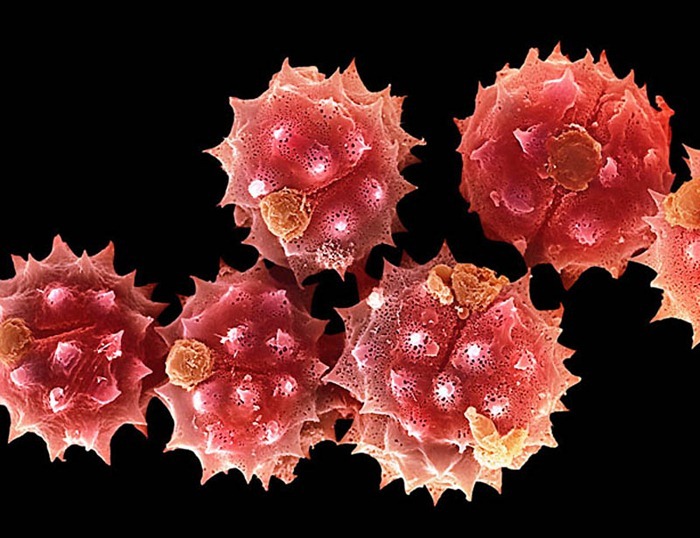
In the week where "Gymnosperm" is our word of the week it is interesting to see a story about the evolution of a very important group of plants - the Angiosperms. These are the flowering plants which include grasses and most of the plants that we eat.
If this data is correct, putting the appearance of the Angiosperms back into the Triassic rather than the later Cretaceous as currently thought, it could change our understanding of both plant evolution but the evolution of all the aniamlls that sit above plants in the food chain.
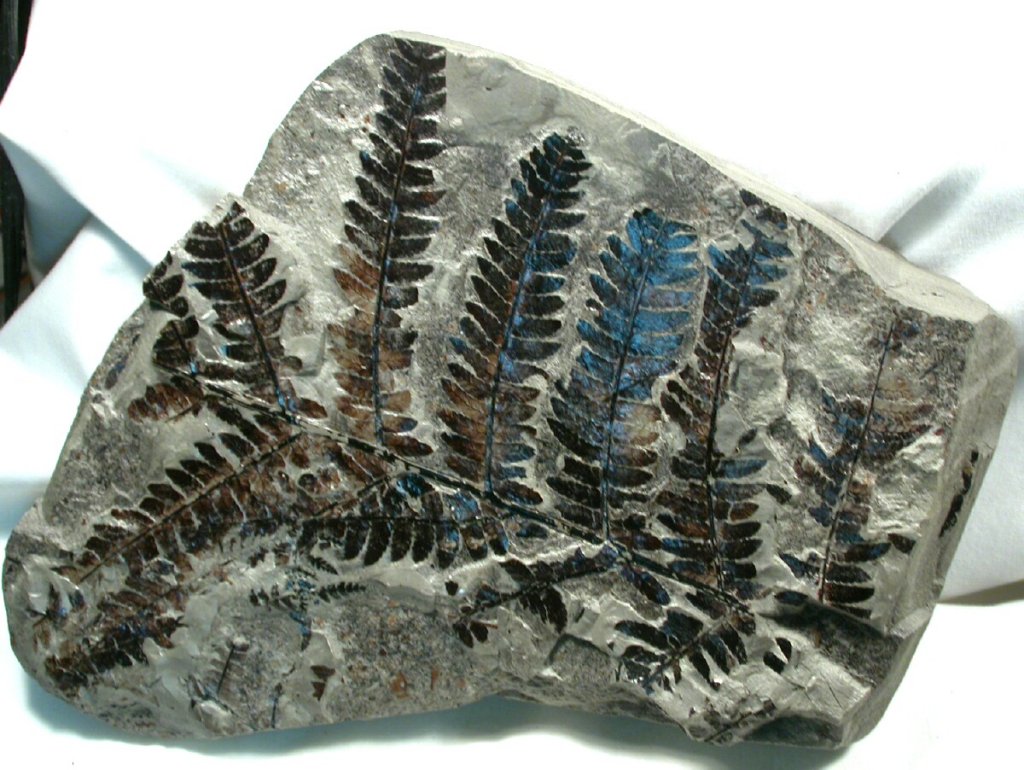
Gymnosperms are a type of seed-bearing plants (the name means "naked seed") that form a group that produced the earliest fossil trees. They are an important group of plants to study as a result of their evolutionary history.
A permitted intrusion is an igneous intrusion where the space that it occupies has been created by forces other than those created by the intrusion of magma. For example if a volcano collapses after eruption in a cauldron subsidence event to make a caldera, any magma intruded along the faults that occur will follw those faults and result in a permitted intrusion. An example of this type of intrusion is a ring dyke.
Bottom Load is another term for bed load - the clasts of rock that are transported along the bottom of a river by the process of traction.
The bottom load can tell us a great deal about the nature of the rver that transported the sediment. the shape of the clasts tells geologists about the maturity of the sediment; the arrangement of the clasts tells geologists about the direction of the river's flow if the pebbles are imbricated; the size of the clasts can tell geologists the speed of the flow that deposited them through using the Hjulstrom Curve.
One of the most remarkable dinosaur fossils ever found is up for sale. It is one of the very rare fossils of a Tyrannosaurus (there have only been two specimens found that are more than 50% complete). The fossil specimen has preserved the final moments of two dinosaurs, predator and prey, as they fought for survival. The Tyrannosaur even left one of its teeth embedded in the neck of the Ceratopsid dinosaur it was attacking. On what turned out to be a bad day for both dinosaurs they managed to fatally wound each other and were preserved still locked together in combat. What makes it even rarer is that it is thought to be a member of a new species of dwarf Tyrannosaur called Nanotyrannus (though this conclusion is controversial).
If you would like to buy this amazing fossil, either to decorate your bedroom or to donate to your favourite Geology teacher then you will need deep pockets..... the auction estimate is $9,000,000!
This does raise issues about the commercial aspects of fossil hunting. If this specimen was a work of art there would be an outcry if it were to disappear into a private collection. This is a remarkable piece of scientific data but it could end up largely unstudied and out of public view in the collection of a rich amateur. What's being done is legal, but I would like to see this special fossil in a museum where it would be available for study and for people to see it for themselves.
A guyot (or seamount) is a submerged, extinct volcano. There are chains of such volcanoes streching across the Pacific Ocean in particular that are very important in our interpretation of past plate movements and hot spot theory.
I chose this as "Word of the Week" because the biggest volcano on Earth has recently beeen discovered in the Pacific Ocean. The scale of this is staggering (it is over 15 times the area of Wales) and has been compared to the biggest volcano we kow of - Olympus Mons on Mars. What is really surprising is that we have only just discovered something so big - it does give the exciting prospect of what else is there to discover about our planet....
One of the things I love about geology (amongst many!) is that we haven't discovered everything - there are still things to learn and to find. New species of dinosaurs always catch my eye, particularly when there is somethig striking or unusual about the new find.
Nasutoceratops titusi is a species of Ceratopsid dinosaur that roamed what is now Utah in the US during the late Cretaceous period (about 75,000,000 years ago). The 5 metre long, 2.5 tonne herbivore had the longest horns (and the biggest nose) of any species in this group yet discovered - despite plenty of competition from species like Styracosaurus.
Utah is a rich source of dinosaur fossils, such as Dinosaur National Monument. It sounds like there is more to find.....
BBC News story