Showing posts with label discovery. Show all posts

Wednesday, 10 September 2014

Earthquakes from Space


A new European satellite has given us a new way to monitor the impact of earthquakes.  Sentinel measure the small changes in the position of parts of the Earth's crust by comparing 'before' and 'after' images of an area that has experienced an earthquake.  Analysis of these results can show where stresses in the crust are being concentrated which may allow for predictions to be made about the location of subsequent tremors. 

In the search to find a method of effectively predicting seismic events, any new tool that can contribute has to be welcomed.

Mission to Mars


It is now 2 years since NASA's Curiosity Rover landed on Mars.  The geological discoveries it has made have been spectacular, and it isn't finished yet.  BBC News America have reviewed its progress and its future challenges.

What do you think its most important discovery has been to date?

Thursday, 6 March 2014

The oldest bit of the Earth

Many of you will have heard me discuss in class that when I was a student (which isn't that long ago!) I learnt that the oldest rock in the crust was 3,800 Ma from Greenland; this had changed to 4.200 Ma from dating a rock in northern Canada.  We now have to revise that number again as a Zircon crystal from Western Australia has been dated (by the Uranium-Lead method) to be 4,400 Ma.  We still have meteorites that are older, but we are finding fragments of the earliest crust which may give us an indication of the processes that formed our planet.

Lagerstätten

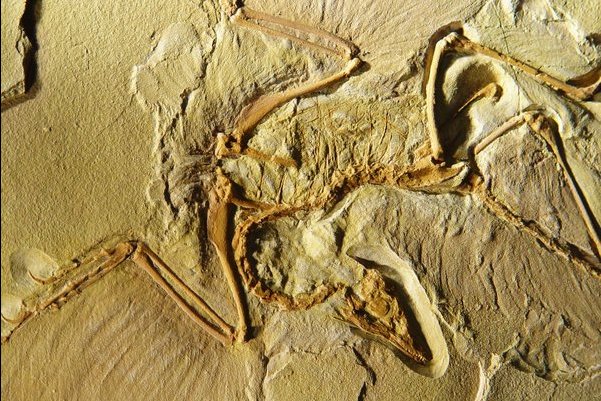
Lagerstätten are sedimentary deposits that show remarkable fossils that otherwise would not be preserved.  It is a German word that literally means "resting place" which, I think, is a very appropriate word for such a special and important piece of the fossil record.

There are quite a few of these around the world which give us tantalising snapshots from the history of life.  Several of these are very important in our understanding of key moments in evolutionary history such as Archaeopteryx (shown above) from the Solnhofn Limestone in Germany and the incredible soft-bodied "experimental life forms" of the Burgess Shale.

Another of these was discovered very recently, a site of a mass beaching of whales in the late Tertiary of Chile.

Wednesday, 19 February 2014

Seismic Puzzle

The earthquake hazard map of the USA has a major seismic puzzle.  It's not the high hazard in California (CA) caused by the San Andreas Fault or in Washington (WA) and Alaska (AK) easily explained by the occurrence of subduction zones around the Pacific Ring of Fire.  There is another high hazard zone along the Mississippi River further east.

Harri P in Year 12 drew my attention to this odd occurrence of earthquakes thousands of kilometres from a plate boundary.  There have been some major seismic events in this region, in particular the magnitude 7 New Madrid earthquakes of 1811-12.  The cause of these 'quakes was a puzzle until a few years ago when a team of geologists from the University of Quebec discovered a slab of crust that is descending into the mantle, disrupting the flow of the mantle and the crust in this area.  It is similar in some ways to a subduction zone but without the fold mountains, trench and volcanoes.  It does pose a continuing danger of creating major earthquakes.

It is a very strange phenomenon and goes to show just how much we still have to discover about how the crust and the mantle work.

Monday, 6 January 2014

The end of the rainbow?

The luck of the Irish may have struck!  Geologists working for the Geological Survey of Ireland and the Geological Survey of Northern Ireland have identified a gold deposit that may be worth £11,000,000,000.  The potential is huge, but so are the costs.  Should the Irish develop this resource and help to pay their debts?

Wednesday, 1 January 2014

A Green land?


Greenland is a strange place.  It has a population a little bit bigger than the population of Barry in an area over 100 times greater than that of Wales.  It is still linked to Denmark, relying on a large financial subsidy from the Danish government to pay for essential services which is being reduced as Greenland gradually becomes more independent.  This does mean that the Greenlanders will need an alternative source of income to replace the £378,345,000 that the Danes give each year (£6,712 for every Greenlander).

The only way that such a small population with such an inhospitable climate is going to make that amount of money is to exploit its natural resources.  This creates a huge dilemma for the people who live there.  Geologists from an Australian mining company, Tanbreez, have found a potentially huge deposit of rare earth minerals but the people who live around the site are conflicted.  The money and the jobs that the mine will bring will resolve many of the economic and social problems that remote communites suffer, however new social and environmental problems will be caused.

Do you think it's possible to balance the positive and negative impacts of this development?  The geology of Greenland means that there are plenty of geological resources in the rocks, this could be the first step in a long period of economic growth or the start of the destruction of communities.  

There is an alternative view of these resources here.

Tuesday, 17 December 2013

Jade Rabbit finds remarkable rocks


China has sent its first space mission to the moon a rover called Yutu (which translates as "Jade Rabbit") is exploring a part of the Moon called the Mare Imbrium. 

Initially I must admit to being sceptical about the scientific purpose of the mission, thinking that it may have just been a prestige project moving Chinese space science forward rather than to discover new ideas about the Moon's geology.  However, the rover has landed at the eastern edge of its intended landing area and consequently has ended up in a geologically fascinating part of the moon.  It has landed at the edge of an area of lava flows which (as they have few impact craters visible) are thought to be some of the youngest flows on the Moon.  The geological kit on the rover should show something about the composition of these lavas.  It will be interesting to see what Yutu discovers on its lunar travels.

Friday, 29 November 2013

Triassic Toilet


Coprolites (fossilised faeces) are trace fossils that give an insight into the diet and digestive processes of long-extinct animals that we cannot get from their body fossils as the soft parts of an animal generally aren't preserved as fossils.

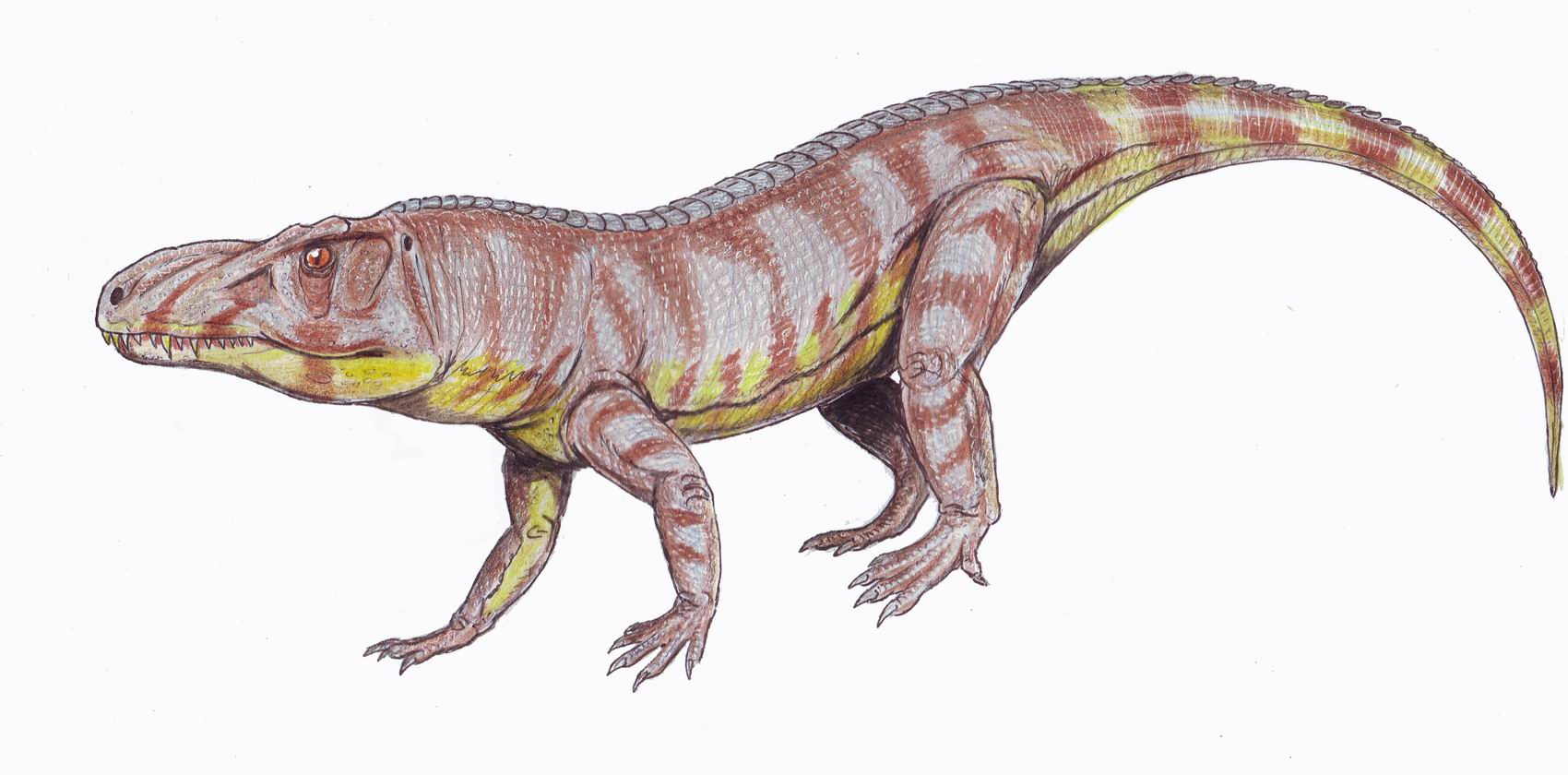
Palaeontologists working in Argentina have found a communal toilet area used by Dinodontosaurus with a remarkable density of 94pm-2 (poos per square metre!).  The geological implications of this are fascinating in terms of what it can tell us about the behaviour of an early predecessor of the dinosaurs.  The benefits of having a defined place for a toilet are obvious as parasites may be less of a problem and food and faeces aren't mixed. It could also have been a way for the Dinodontosaurus to ward off the crocodile-like predator Luperosuchus.
What I find interesting about this is that it implies some type of social organisation for these animals, something we don't see in modern cold-blooded animals.  What do you think caused these animals to behave in this way?

Friday, 8 November 2013

Wales' Greatest Scientist?


It is 100 years since possibly Wales' greatest scientist died.  Alfred Russel Wallace was born in Usk, Monmouthshire but found fame in his lifetime for the work he did in what is now Indonesia.  He was the co-discoverer of the theory of evolution by natural selection, though because the other scientist to discover the idea (Charles Darwin) wrote the book - he got most of the credit.

Although most of Wallace's work was biological he did make some discoveries, other tha evolution, that have some geological significance.  He defined the study of biogeography and worked out one of the earliest pieces of evidence that would,after his death, be explained by plate tectonics - the Wallace Line.

Although he was one of the most famous scientists of his day, he fell into obscurity after his death.  This is being rectified with a new statue that has been installed at the Natural History Museum.  His is an inspiring story of scientific excellence, utter determination and modesty despite his obvious talents - he is a Welshman to admire.

Friday, 1 November 2013

Dinosaur Maths


Argentinosaurus is a member of a group of dinosaurs that are the biggest animals ever to have lived on land - the Sauropods.  This giant size presents a lot of questions for palaeontologists to answer about how they lived: how did they eat enough to survive? how did they breed? how quickly did they grow? and how did they move around?

This last question is particularly tricky, especially when we consider that Argentinosaurus was at least 10 times heavier than an elephant.  New research has used computer models to investigate how these giant animals could move as the problem comes down to the maths behind the movement.  Let me explain:

As the length of an animal increases, the weight of the animal increases by a cube (power of 3) because the weight is a property of the animals volume.  However the force that the muscles can generate only goes up by a square (power of 2) because they are limited by the area of muscle connection to the bone. 

The conclusion is that these animals are at the limit of the size that flesh and bone can support on land but they must have had lots of adaptations to cope with the stresses on their bodies - such as limited joint movement to keep them steady.  Clearly, size isn't everything.

Monday, 14 October 2013

Core blimey!


New research on the movement of iron through silicate rocks by Stanford Unversity has the potential to change our view about how the Earth's core formed.  Professor Wendy Mao and her team have discovered that iron can percolate through silicate minerals which means that our idea of the mantle and core being distinct bodies from the earliest stage of formation of the planet may be wrong.  Instead we can have a model where after our planet aggregated there was a gradual evolution of the internal structure as the materials differentiated by percolation under the influence of gravity.

The implications of this discovery may be that data we get from meteorites may not give us a good control on the bulk composition of the Earth.  It seems that we have a lot more to discover about our planet.

Wednesday, 2 October 2013

Rise of the Angiosperms


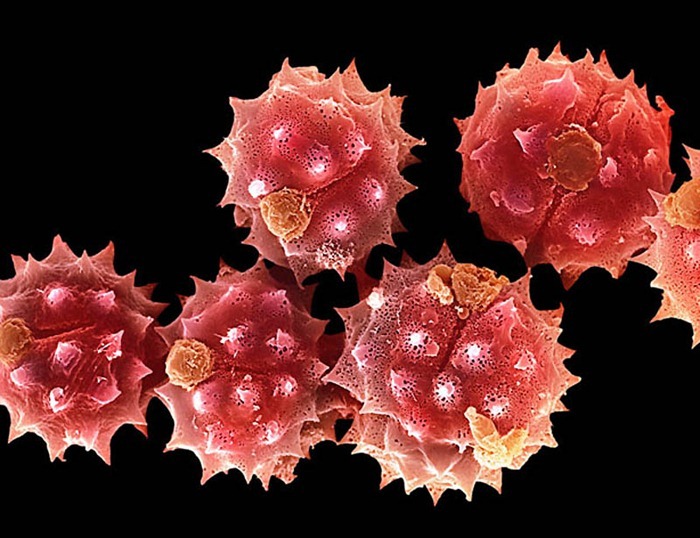
In the week where "Gymnosperm" is our word of the week it is interesting to see a story about the evolution of a very important group of plants - the Angiosperms.  These are the flowering plants which include grasses and most of the plants that we eat.

If this data is correct, putting the appearance of the Angiosperms back into the Triassic rather than the later Cretaceous as currently thought, it could change our understanding of both plant evolution but the evolution of all the aniamlls that sit above plants in the food chain.

Monday, 16 September 2013

Curious about Curiosity?


One of the most exciting pieces of geological research currently being undertaken is NASA's Curiosity Rover which is exploring the surface of Mars.  The geological discoveries that the mission has already made, before it even reaches its objective, are remarkable. 

There is a lot of information about the mission on the Internet, some useful links are below:

NASA Mars Science Laboratory

A year of discovery

Geological discoveries

Wikipedia (Mars Rover)

Friday, 13 September 2013

Duelling Dinosaurs

One of the most remarkable dinosaur fossils ever found is up for sale.  It is one of the very rare fossils of a Tyrannosaurus (there have only been two specimens found that are more than 50% complete).  The fossil specimen has preserved the final moments of two dinosaurs, predator and prey, as they fought for survival.  The Tyrannosaur even left one of its teeth embedded in the neck of the Ceratopsid dinosaur it was attacking.  On what turned out to be a bad day for both dinosaurs they managed to fatally wound each other and were preserved still locked together in combat.  What makes it even rarer is that it is thought to be a member of a new species of dwarf Tyrannosaur called Nanotyrannus (though this conclusion is controversial).

If you would like to buy this amazing fossil, either to decorate your bedroom or to donate to your favourite Geology teacher then you will need deep pockets..... the auction estimate is $9,000,000!

This does raise issues about the commercial aspects of fossil hunting.  If this specimen was a work of art there would be an outcry if it were to disappear into a private collection.  This is a remarkable piece of scientific data but it could end up largely unstudied and out of public view in the collection of a rich amateur.  What's being done is legal, but I would like to see this special fossil in a museum where it would be available for study and for people to see it for themselves.

Thursday, 18 July 2013

Big nose, horn face!


One of the things I love about geology (amongst many!) is that we haven't discovered everything - there are still things to learn and to find.  New species of dinosaurs always catch my eye, particularly when there is somethig striking or unusual about the new find.

Nasutoceratops titusi is a species of Ceratopsid dinosaur that roamed what is now Utah in the US during the late Cretaceous period (about 75,000,000 years ago).  The 5 metre long, 2.5 tonne herbivore had the longest horns (and the biggest nose) of any species in this group yet discovered - despite plenty of competition from species like Styracosaurus. 

Utah is a rich source of dinosaur fossils, such as Dinosaur National Monument.  It sounds like there is more to find.....

BBC News story