Showing posts with label Word of the Week. Show all posts

Wednesday, 10 September 2014

Black Smoker


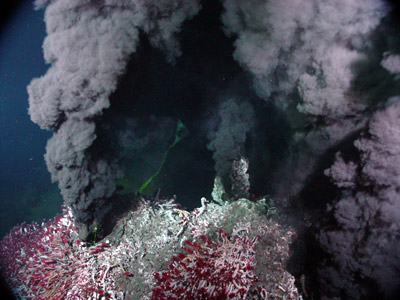
A black smoker is a hydrothermal vent on the sea bed, often found around constructive plate margins.  Superheated water is erupted into very cold seawater causing dissolved sulphide minerals to be precipitated (thereby creating the 'smoke').  Finding ancient deposits that were formed this way can be very lucrative as they can be rich in metal ore minerals.  You can find out more by watching this YouTube video.

Thursday, 6 March 2014

Lagerstätten

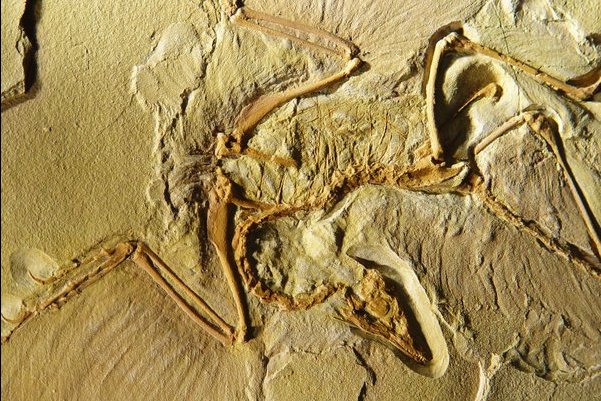
Lagerstätten are sedimentary deposits that show remarkable fossils that otherwise would not be preserved.  It is a German word that literally means "resting place" which, I think, is a very appropriate word for such a special and important piece of the fossil record.

There are quite a few of these around the world which give us tantalising snapshots from the history of life.  Several of these are very important in our understanding of key moments in evolutionary history such as Archaeopteryx (shown above) from the Solnhofn Limestone in Germany and the incredible soft-bodied "experimental life forms" of the Burgess Shale.

Another of these was discovered very recently, a site of a mass beaching of whales in the late Tertiary of Chile.

Sunday, 16 February 2014

The Paradox of Plenty


It is a hidden secret of our increasing desire for and use of electronic gadgets that many of the minerals essential to their manufacture are both the product of, and the finance for, war.  

Mineral resources are distributed by geological accident rather than geopolitical convenience.  This can create the potential for enormous geological wealth in places that do not have the political and financial stability for their exploitation to benefit the communities in which they are located the 'Resource Curse'.  You may be familiar with the concept of 'Blood Diamonds' from the film, but less well known is how gold, tin, tungsten and coltan can also be produced in situations of conflict and terrorism.

Apple produce an annual report to detail the source of the mineral resources that go into their iPhones, iPads and Macs showing how many of their suppliers meet international standards of human rights and environmental protection.  It makes for interesting reading and it does how the importance of geological exploration to locate the resources we need in a wider variety of places.  Do you think about where the minerals in your gadgets started out as rocks in the ground?

Friday, 13 December 2013

Penetration twin

A penetration twin is a type of twinned crystal.  This is where crystals are joined either as contact twins, where the crystals share one surface, or as a penetration twin,where the crystals grow across each other (as in the crystal shown above).

Twinning is a feature of several minerals and can be a characteristic feature of different types of feldspar (see below).  The crystal above is a mineral that you should know; can you identify it?

Sunday, 1 December 2013

Cow dung bomb

There are some words in geology that graphically describe features we see in the rock, but few are quite as illustrative as cow dung bomb (sometimes known as a cow pat bomb).  It is a type of volcanic bomb - igneous rock ejected from a volcanic eruption but t does have an unusual form resembling .... well you can guess.  Most volcanic bombs cool in the air, creating a distinctive aerodynamic shape (see below).  Cow dung bombs are more liquid and actually land still largely molten, giving them their distinctive shape.

Where do you think we could find cow dung bombs?

Monday, 18 November 2013

Griffith Crack

A Griffith Crack is a mechanism to explain how rocks, which can be very strong materials, are fractured by stress in the crust.  Microscopic cracks in the rock, which can be the result of a flaw or inclusion in a mineral, will concentrate the tensile stress in a rock.  This can lead to the expansion (or propagation) of the crack and even to failure of the rock resulting in a fault.

Monday, 11 November 2013

Dogger


A dogger is a concretion, a mass of sedimentary rock that has been cemented more than the surrounding rock.  These often weather out of their original rock, the most spectacular examples in the UK are those in Laig Bay on the Isle of Eigg (shown above).  The Moeraki Boulders on the South Island of New Zealand are another example of this feature.

The name was also used as a term, though now superseded, for the Middle Jurassic.

Friday, 1 November 2013

Boudinage


Boudinage is from a French word meaning "sausages".  It is a distinctive structure formed by extension of a competent rock under tensional stress where it is surrounded by incompetent rock.  The competent rock starts to break up forming the sausage-like structures shown in the photograph. This can even happen on a microscopic scale within a rock where the process is called Rodding.

Friday, 18 October 2013

Piggyback Thrust

 
A Piggyback Thrust is a type of reverse fault created by extreme compression of the crust during a plate collision.  The "piggyback" is where several thrust faults occur in succession.  this is one of the key aspects of an orogeny, where mountains are built.

The far northwest of Scotland shows a superb example of this called the Moine Thrust (shown in the cross section above).  This area was key for geologists to understand the process of mountian building, before plate tectonics was even discovered.

Monday, 14 October 2013

Ozocerite


Ozocerite (or Earth Wax) is a naturally forming type of paraffin wax that is found in veins, similar to minerals.  It has been found in several places around the world, including Wales.  It is formed from the  evaporation of petroleum and is notable for its smell (the name means "stench wax" in Greek) though this is removed when it is processed.

It has been mined comercially in a few places in the past, though the only active mine now is in Turkey.  It has a number of applications including cosmetics like the lipstick shown above...

Before I receive any emails, there are different spellings for this word.  I have used the spelling from the DoG.

Tuesday, 8 October 2013

Retardation time


When a viscous material (such as the mantle) is displaced by a force on the crust (such as from an ice sheet) it will deform - a process called isostatic readjustment.  If that force is removed the crust will rebound as the mantle flows back underneath it.  This doesn't happen at a constant rate as it will slow down the closer it is to a state of equilibrium (where it should be), this slowing down is called the retardation time.

Sunday, 29 September 2013

Gymnosperm

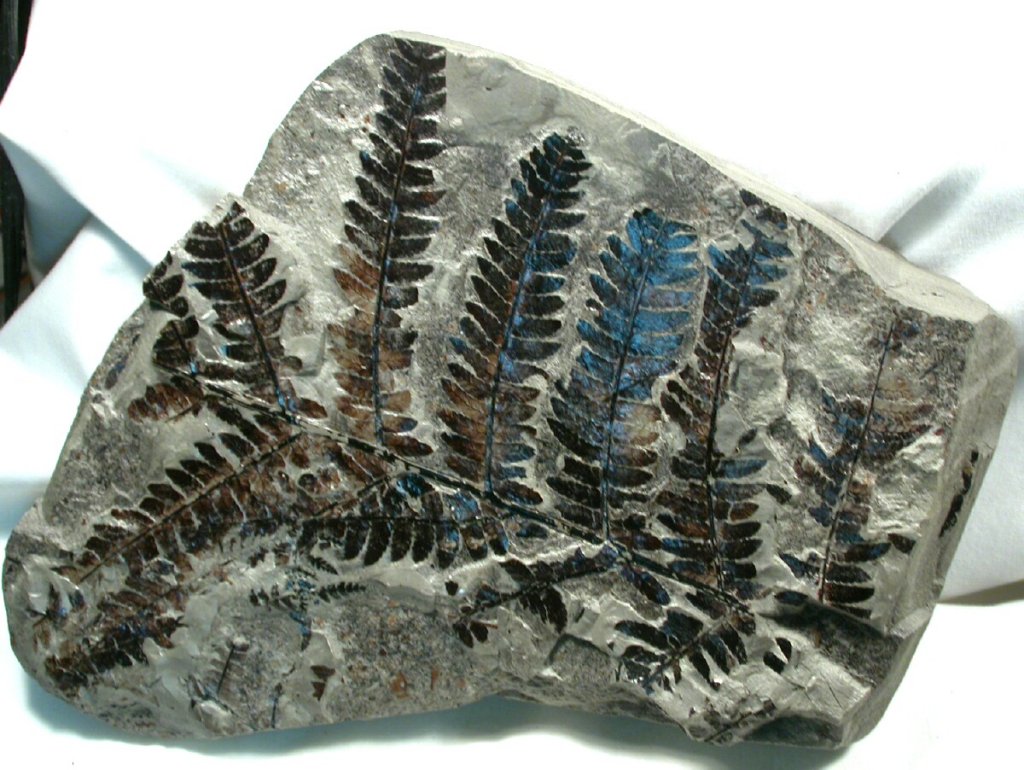
Gymnosperms are a type of seed-bearing plants (the name means "naked seed") that form a group that produced the earliest fossil trees. They are an important group of plants to study as a result of their evolutionary history.

Friday, 20 September 2013

Permitted intrusion


A permitted intrusion is an igneous intrusion where the space that it occupies has been created by forces other than those created by the intrusion of magma.  For example if a volcano collapses after eruption in a cauldron subsidence event to make a caldera, any magma intruded along the faults that occur will follw those faults and result in a permitted intrusion.  An example of this type of intrusion is a ring dyke.

Friday, 13 September 2013

Bottom Load


Bottom Load is another term for bed load - the clasts of rock that are transported along the bottom of a river by the process of traction.

The bottom load can tell us a great deal about the nature of the rver that transported the sediment.  the shape of the clasts tells geologists about the maturity of the sediment; the arrangement of the clasts tells geologists about the direction of the river's flow if the pebbles are imbricated; the size of the clasts can tell geologists the speed of the flow that deposited them through using the Hjulstrom Curve.

Monday, 9 September 2013

Guyot


A guyot (or seamount) is a submerged, extinct volcano.  There are chains of such volcanoes streching across the Pacific Ocean in particular that are very important in our interpretation of past plate movements and hot spot theory.

I chose this as "Word of the Week" because the biggest volcano on Earth has recently beeen discovered in the Pacific Ocean.  The scale of this is staggering (it is over 15 times the area of Wales) and has been compared to the biggest volcano we kow of - Olympus Mons on Mars.  What is really surprising is that we have only just discovered something so big - it does give the exciting prospect of what else is there to discover about our planet....

Tuesday, 3 September 2013

Helluhraun


Helluhraun is an Icelandic word for a geological feature that, in English, has a Hawaiian word (pahoehoe) to describe it.

This is a ropey surface that forms on a very fluid mafic lava flow, like the skin on a custard that wrinkles up when it is poured. 

I thought it would be a good way to welcome you all back for the new school year.