A new European satellite has given us a new way to monitor the impact of earthquakes. Sentinel measure the small changes in the position of parts of the Earth's crust by comparing 'before' and 'after' images of an area that has experienced an earthquake. Analysis of these results can show where stresses in the crust are being concentrated which may allow for predictions to be made about the location of subsequent tremors.
In the search to find a method of effectively predicting seismic events, any new tool that can contribute has to be welcomed.
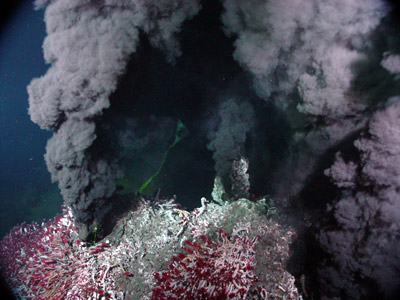
A black smoker is a hydrothermal vent on the sea bed, often found around constructive plate margins. Superheated water is erupted into very cold seawater causing dissolved sulphide minerals to be precipitated (thereby creating the 'smoke'). Finding ancient deposits that were formed this way can be very lucrative as they can be rich in metal ore minerals. You can find out more by watching this YouTube video.
Over the last few weeks you may have noticed that one of Iceland's many volcanoes has been getting more active, generating hundreds of volcanoes in a day.Bárðarbunga is one of the volcanoes underneath the huge ice sheet of Vatnajökull and though it is a mafic eruption it does have the potential to create similar aviation problems that Eyjafjallajökull caused in 2010 because of its similar sub-glacial setting. So far there has been a little ash and a fissure eruption as a dyke reached the surface. The aviation warnings have fluctuated from yellow to orange and then back again. Perhaps the bigger hazard is from a jökulhlaup that can be triggered by the melting of the glacial ice from the volcano's heat. It will be worth keeping an eye on what's happening with this. For the latest updates, check out the website of the Icelandic Meteorological Office.
Geology provides the materials for civilisation to exist and a way for us to understand how our home planet works. There are lots of different ways in which an understanding of the science of geology contributes to all our lives. The Geological Society of London (the representative body for professional geologists) have produced some guides to the role of geology and its contribution to our society. You can find them here: Geology for Society
Many of you will have heard me discuss in class that when I was a student (which isn't that long ago!) I learnt that the oldest rock in the crust was 3,800 Ma from Greenland; this had changed to 4.200 Ma from dating a rock in northern Canada. We now have to revise that number again as a Zircon crystal from Western Australia has been dated (by the Uranium-Lead method) to be 4,400 Ma. We still have meteorites that are older, but we are finding fragments of the earliest crust which may give us an indication of the processes that formed our planet.
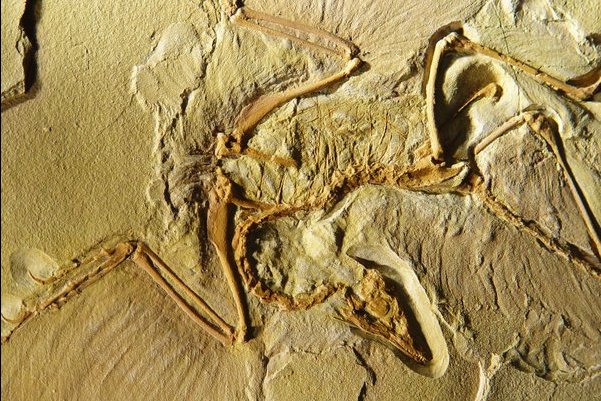
Lagerstätten are sedimentary deposits that show remarkable fossils that otherwise would not be preserved. It is a German word that literally means "resting place" which, I think, is a very appropriate word for such a special and important piece of the fossil record. There are quite a few of these around the world which give us tantalising snapshots from the history of life. Several of these are very important in our understanding of key moments in evolutionary history such as Archaeopteryx (shown above) from the Solnhofn Limestone in Germany and the incredible soft-bodied "experimental life forms" of the Burgess Shale. Another of these was discovered very recently, a site of a mass beaching of whales in the late Tertiary of Chile.