
Thursday, 6 March 2014
The oldest bit of the Earth

Lagerstätten
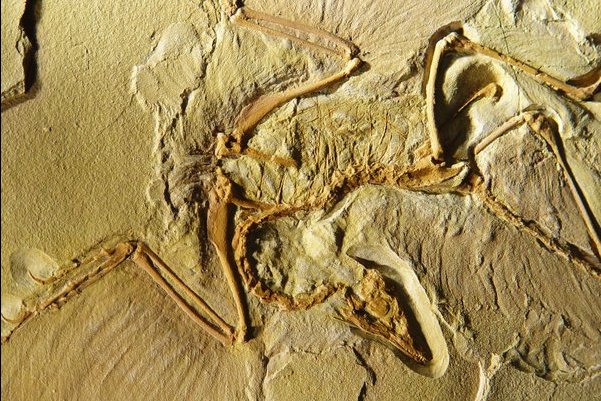
There are quite a few of these around the world which give us tantalising snapshots from the history of life. Several of these are very important in our understanding of key moments in evolutionary history such as Archaeopteryx (shown above) from the Solnhofn Limestone in Germany and the incredible soft-bodied "experimental life forms" of the Burgess Shale.
Another of these was discovered very recently, a site of a mass beaching of whales in the late Tertiary of Chile.
Thursday, 20 February 2014
Did you feel it?

We had an earthquake today! A magnitude 4.1 tremor with its epicentre in the Bristol Channel, just north of Ilfracombe was recorded by the British Geological Survey at 1.21pm.
No reports of damage yet, not even knick-knacks falling! Have a look at a 'VI' on the Mercalli Intensity scale.
That sinking feeling

The Vale of Glamorgan does suffer from sinkholes as well because our bedrock geology here is mostly limestone. How solid is the ground under your feet?
Wednesday, 19 February 2014
Seismic Puzzle

Harri P in Year 12 drew my attention to this odd occurrence of earthquakes thousands of kilometres from a plate boundary. There have been some major seismic events in this region, in particular the magnitude 7 New Madrid earthquakes of 1811-12. The cause of these 'quakes was a puzzle until a few years ago when a team of geologists from the University of Quebec discovered a slab of crust that is descending into the mantle, disrupting the flow of the mantle and the crust in this area. It is similar in some ways to a subduction zone but without the fold mountains, trench and volcanoes. It does pose a continuing danger of creating major earthquakes.
It is a very strange phenomenon and goes to show just how much we still have to discover about how the crust and the mantle work.
Sunday, 16 February 2014
The beauty of columnar joints

Columnar joints in igneous rocks make some of the most spectacular sites in geology, especially if you travel around Iceland. Take a look here to see some of the best from around the world.
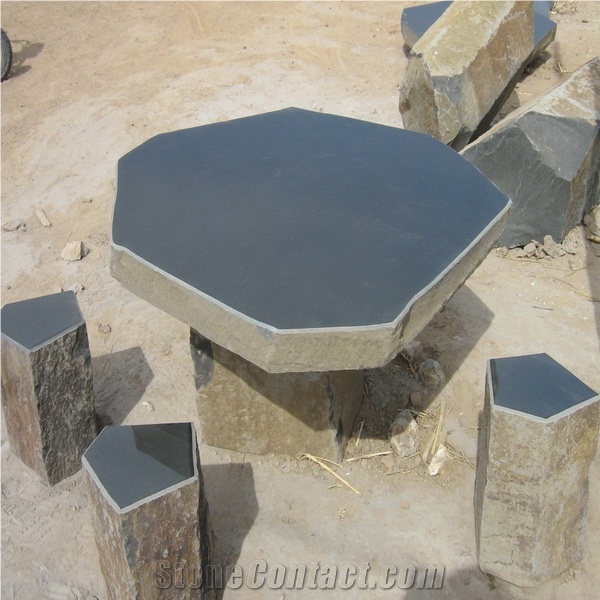
I also like how these distinctive geological structures can get used. There are suppliers who can sort you out with columns of different sizes for your garden; they can be used as the plinth for sculptures, benches and bollards in the street, garden tables, memorials and (my own favourite) gravestones. What would you use them for?




Thanks to Rosie for sending the link.
The Paradox of Plenty

It is a hidden secret of our increasing desire for and use of electronic gadgets that many of the minerals essential to their manufacture are both the product of, and the finance for, war.
Mineral resources are distributed by geological accident rather than geopolitical convenience. This can create the potential for enormous geological wealth in places that do not have the political and financial stability for their exploitation to benefit the communities in which they are located the 'Resource Curse'. You may be familiar with the concept of 'Blood Diamonds' from the film, but less well known is how gold, tin, tungsten and coltan can also be produced in situations of conflict and terrorism.
Apple produce an annual report to detail the source of the mineral resources that go into their iPhones, iPads and Macs showing how many of their suppliers meet international standards of human rights and environmental protection. It makes for interesting reading and it does how the importance of geological exploration to locate the resources we need in a wider variety of places. Do you think about where the minerals in your gadgets started out as rocks in the ground?
Subscribe to:
Posts (Atom)